
Glory Days

We hoisted our tools and dug into the unforgiving soil. Roger lifted a long electric trimmer and called for a swamper. Our fireline began to take shape.
As I dug, I began to remember. Although it had been years, I knew how to do this. The efficient swing of a tool, its bite into grass and shrub, my boots still formed to my feet, nomex pants still fitting as if I had worn them yesterday. I slid easily back in time. It could have been 1992. It could have been 2002.
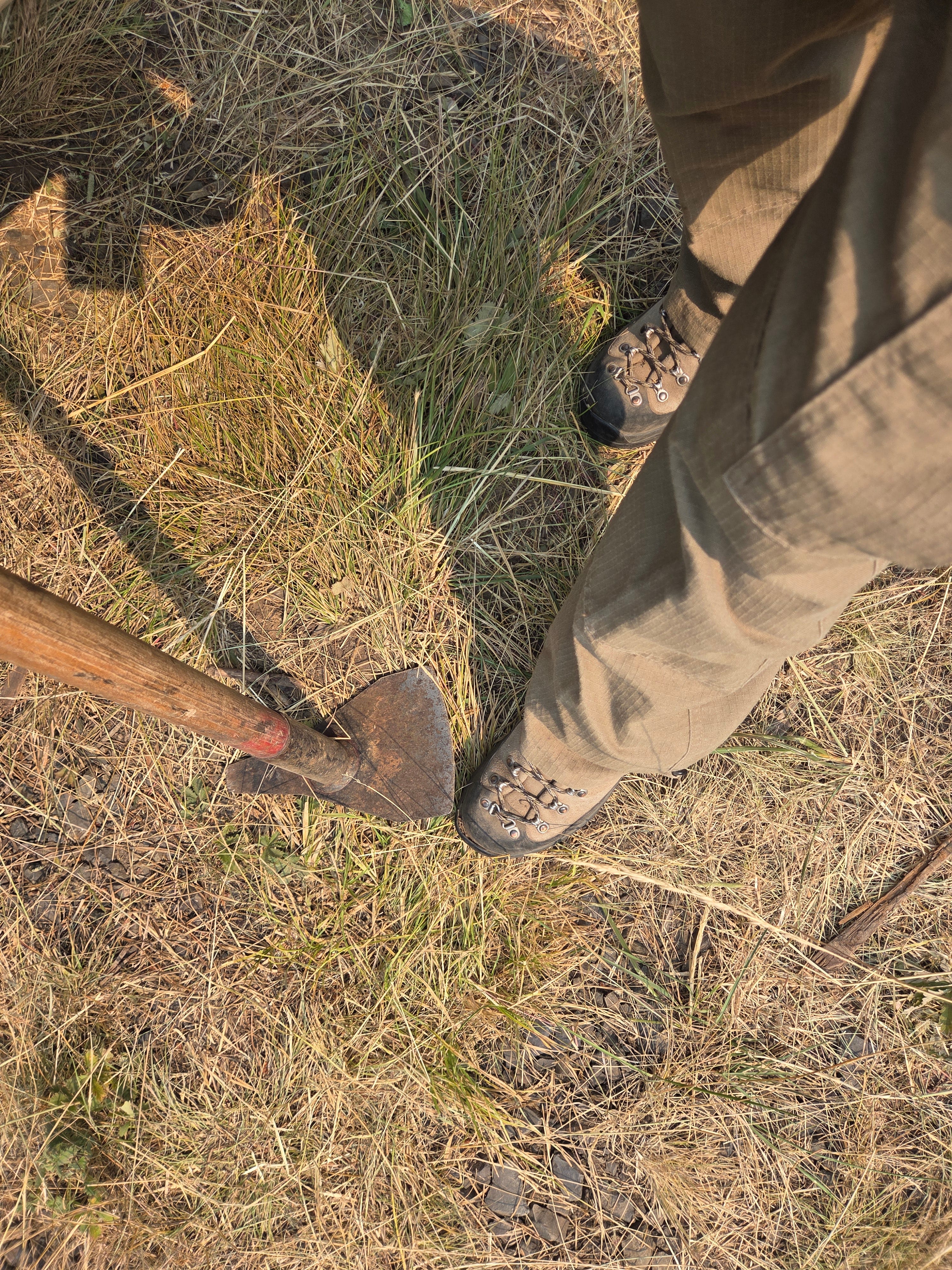
How did I do this for sixteen hours, sometimes more? I recalled a twenty-four hour shift in the tragic summer of 1994, when we drifted sleepless like zombies through the smoke and juniper trees. All the hot, sweaty, difficult days: how did I make it through?
And in the very late eighties and early nineties, when I was often the only woman on the crew, I carried an extra, invisible burden. Us few females had to be better than the guys who openly didn't want us there. They wanted to break us, and they tried hard.
Now, we were a foursome of ex-hotshots, ex-smokejumpers, ex-firefighters working to fireproof a friend's property. The fire lurked several miles north of us, unseen. We took a break and told fire stories. Living among few people who could relate, I had missed this. We laughed. We spoke of mutual fire friends.
The thing about being a woman in fire several decades ago is that it made me tough. Tough in body and mind, but also in locking up all emotion. You simply couldn't break down on a fireline. Not only did it endanger your crew, but you were letting all the women behind you and ahead of you down. You were fulfilling the thoughts a lot of the men already had: women can't hack it.
It turns out, though, that intentionally spackling over my emotions worked well on the line but not in real life. Relationships crashed and burned. Friends said things like I was a hard nut to crack and gave up trying. I had internalized it: emotions were weakness. Dangerous.
We finished up our work, hoping it would hold. It would be nothing against a wind driven fire, but luck might be on our side. I was proud of our little foursome.
I went into a store to get some food for a backpack trip. The cashier eyed me: fire t-shirt, boots, nomex. “How's it going out there?” He wanted to know.
That was the first time in awhile that I felt sad about giving up firefighting. Not to be admired, but that time of feeling part of something brave and selfless, of the close bonds with others: all that is gone now.
These days I show my emotions. I've let my armor crack. I figure that if someone doesn't like it, they can walk away. It took a lot of work to let people in again, but it was worth it.
I took off my fire boots, the ones I didn't give away. I peeled away part of my former self as I did this. There was compassion for the woman I had to be in order to survive, but also gratitude: her grit and determination have allowed me to persevere through dark days.
How did I do it? The adapability of the human body is an amazing thing. I could still be on the fireline, if I wanted to be on the fireline. My whole body, my soul, remenbers how.
There is a special feeling that comes from hard toiling on the ground that is unmatchable anywhere else in life. It invigorates the soul and imbues a cellular connection with the earth. You enter into waking dream state as your body moves in rhythm to facilitate the pivoting and levering of your limbs.
And as you alluded to, the adaptability of the human mind -- at least for many -- can be incredible. Joy, grief, longing, fear, confidence, so many more emotions and thoughts can tear through us at top speed, or spend days, months, years inside our hearts and minds. How mysterious, how amazing.